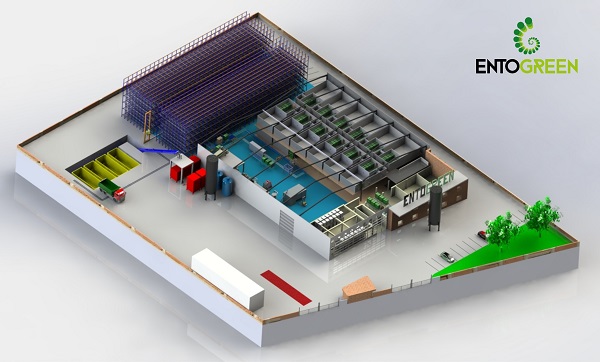
EntoGreen, an Ingredient Odyssey (IO) brand focused on the circular economy in the agri-food sector, has reached an investment that will allow it to build the first industrial unit for bioconversion with insects. The Santarém-based company will use insects to obtain protein for animal feed, non-chemical fertilizers, and insect oil from plant waste.
This is EntoGreen's fifth campaign, after raising 700.000€ through Goparity's investment community (EntoGreen I, II, III, and IV). The previous campaigns were focused on:
- acquiring a robot that allows performing the inoculation process in an automated way with considerable gains in productivity, eliminating the possibility of human error, and improvements in energy efficiency in the process.
- final industrial investments to strengthen the company's cash flow, allowing final payments for the installation and assembly of the industrial unit in Santarém.
- support the company in its overall R&D plan which encompasses an estimated investment of €5 million between 2021 and 2026 for new research projects that focus on creating new solutions for environmental sustainability.
- Corporate R&D project NETA - New Wastewater Treatment Strategies.
This campaign aims to anticipate funds that the company will receive from a European project of around 200K euros within the scope of the Corporate R&D project NETA - New Wastewater Treatment Strategies, and another 220K euros from Portugal2020 Productive Innovation Fund.
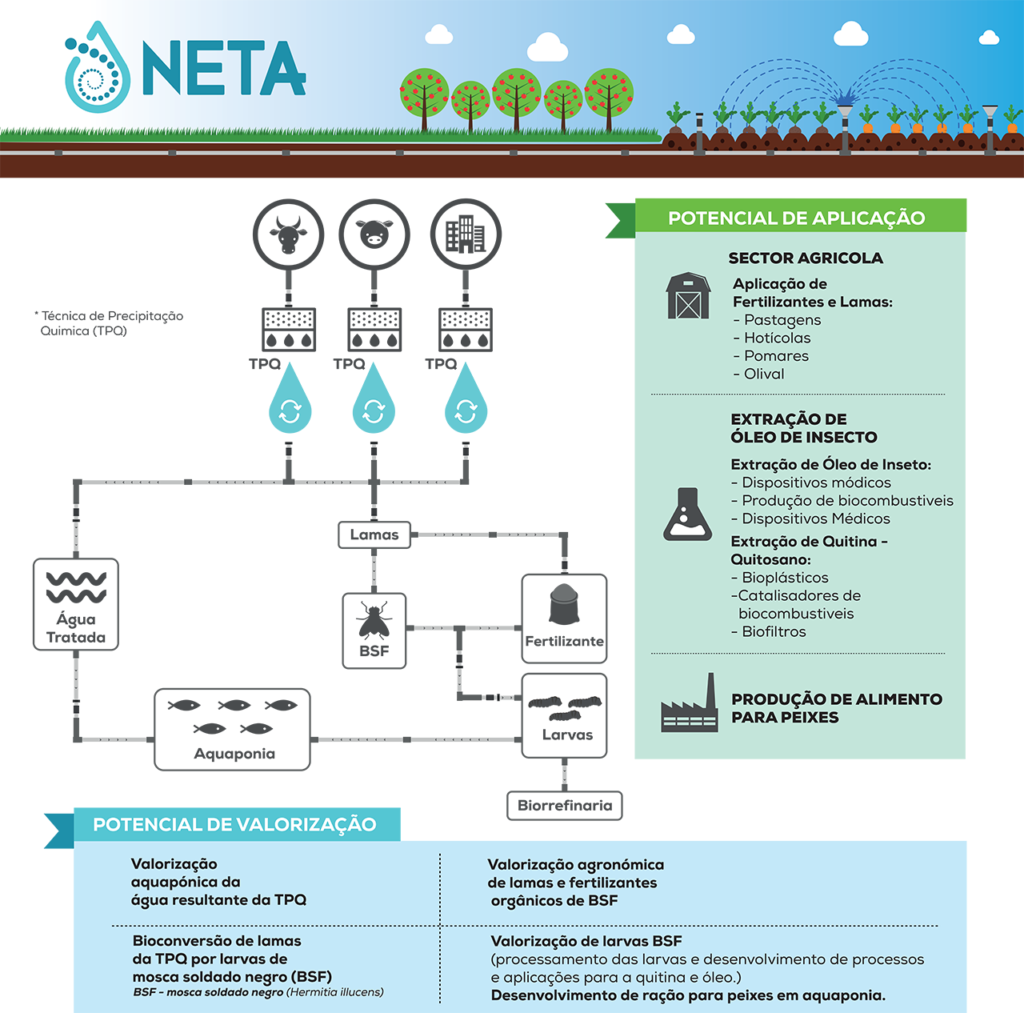
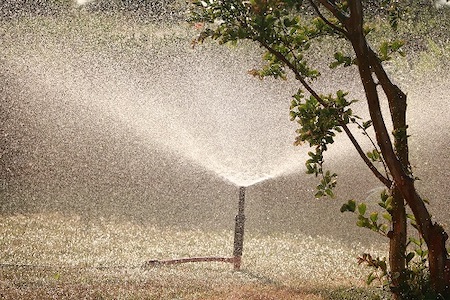
The development of the NETA project aims to create a new technical solution that allows transforming an environmental threat, wastewater and effluents, into a source of nutrients and water resources. A solution that ranges from irrigation to fertilizer production and even to the creation of new bio-industrial solutions.
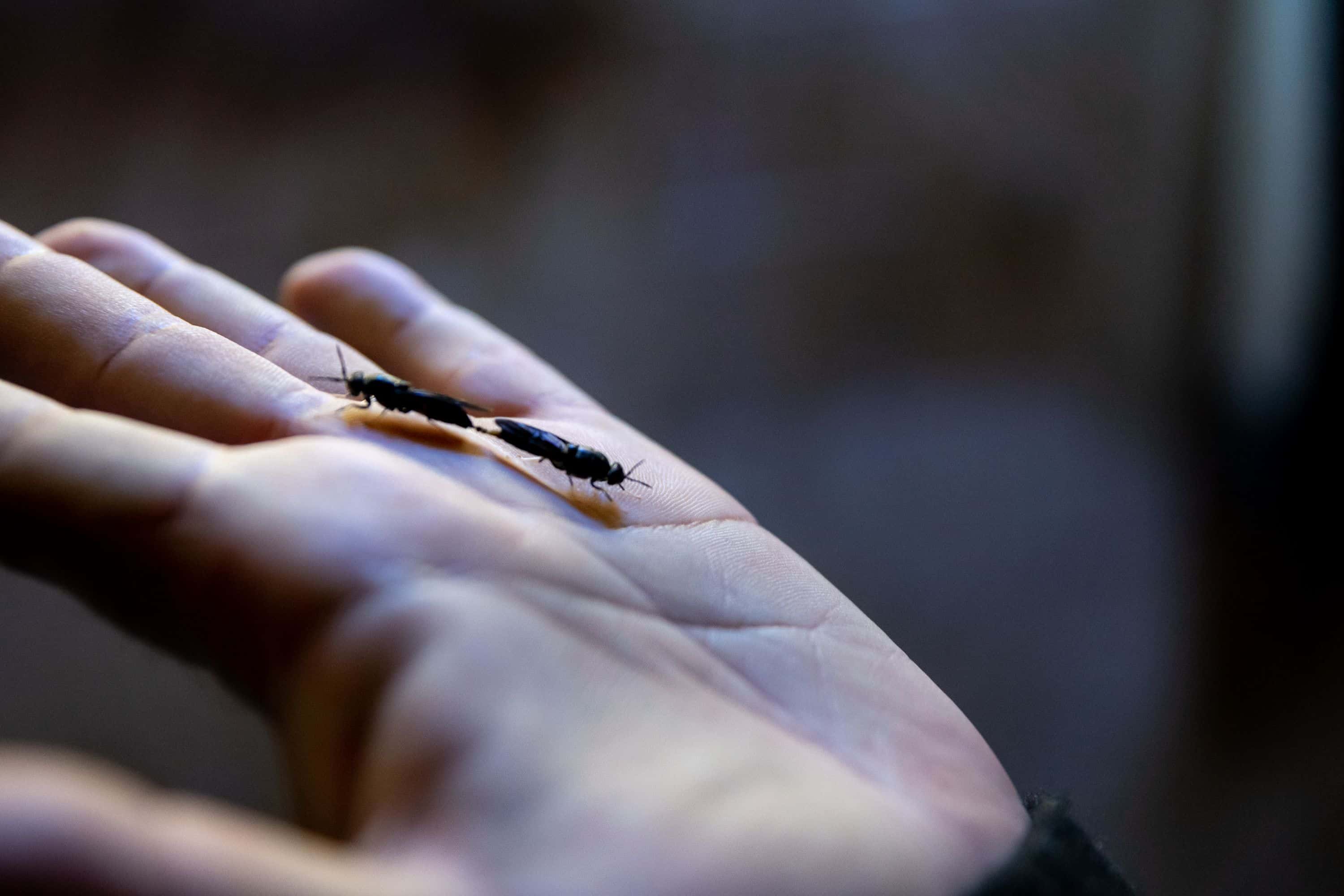
Led by Ingredient Odyssey SA (EntoGreen), the NETA project intends to optimize and use the Chemical Precipitation Technique, which was developed by the Polytechnic Institute of Beja (IPBeja), in the treatment of wastewater, using the treated water for agricultural purposes, with the sludge being biodigested by insects, namely larvae of the black soldier fly (Hermetia illucens).
Processes are being developed in the National Animal Science Station (Instituto Nacional de Investigação Agrária e Veterinária - INIAV) in Santarém. One of the goals is to make this project an example in water circularity. While the water is used in processes ranging from irrigation to aquaponics, the sludge is treated by insects, transforming it into stable, odorless fertilizers ready to be used on farmland. These new fertilizers are already being tested in demonstration fields.
The Univ. of Aveiro and IPBeja will ecotoxicologically evaluate the treated water, sludge, and fertilizers. The insect larvae used in the sludge treatment are being used in biorefinery processes, such as oil extraction for biofuels, cosmetics, and other chemical uses, and the chitin is being used for transformation into chitosan and subsequent use in the creation of bioplastics. As in the past, EntoGreen intends to take this project from laboratory-based development to industrial application, making this project a business and environmental asset.

.webp)




















.webp)

.svg)

.svg)


.svg)

.svg)
.svg)
.svg)
.svg)
