
.webp)
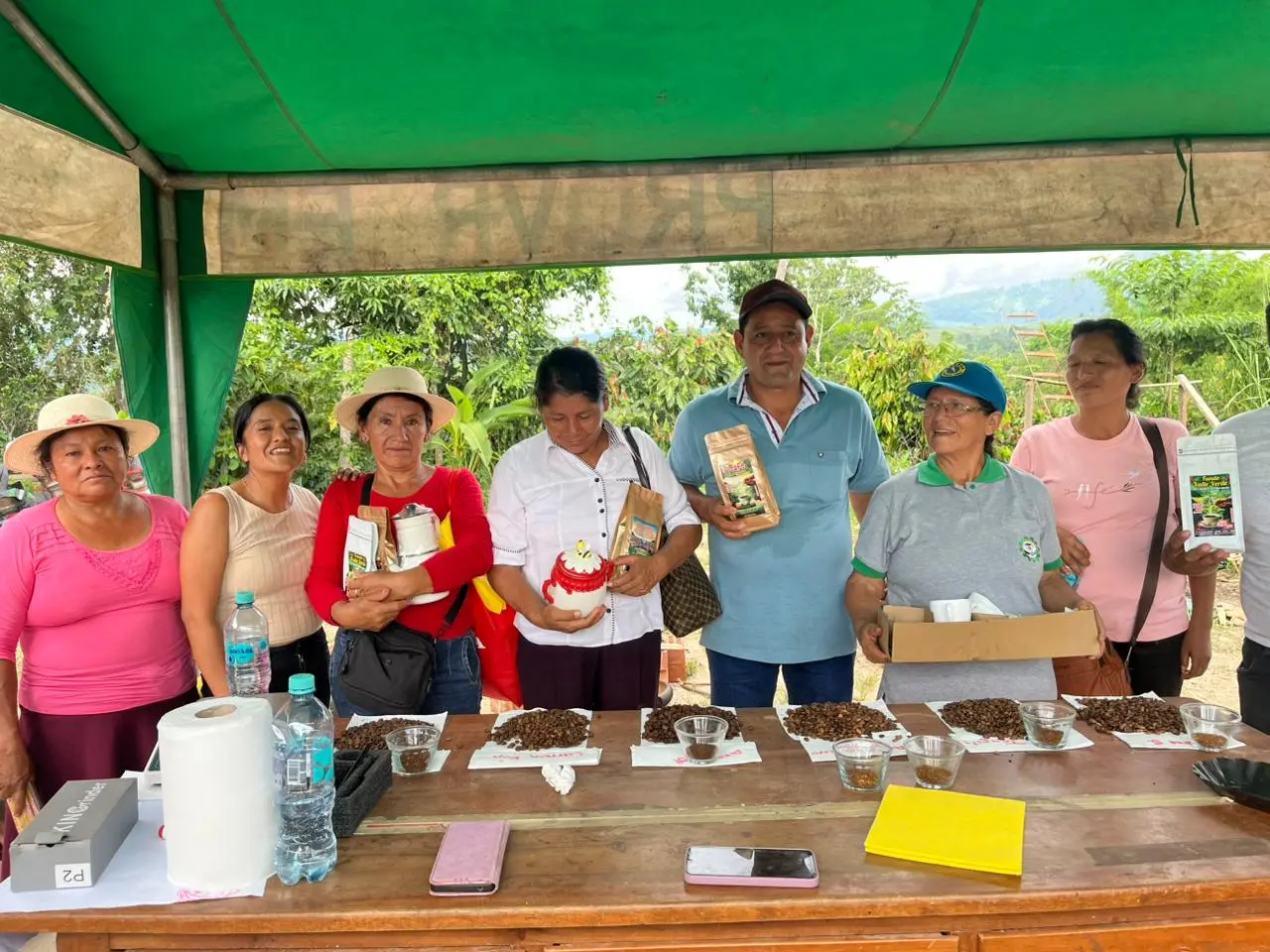
What does women's leadership actually look like inside a smallholder coffee cooperative in the Peruvian Andes? Not as a policy goal or a certification requirement, but as a daily operational reality, built over two decades by the people who showed up and did the work.
This is the story of the women of the Agrarian Cooperative Sangareni.
The women of Sangareni: producers, managers, and leaders
Rural coffee cooperatives are not always known for women in leadership. Sangareni is a different story.
Of the 379 members of Cooperativa Agraria Sangareni - a Fairtrade specialty coffee cooperative in Pangoa, in Peru's central rainforest - 109 are women. They grow coffee, manage farms, sit on the cooperative's governing board, lead the selective harvesting that determines the quality of every cup, and run a dedicated export line sold directly to a buyer in Germany. In Sangareni's own words, they are "producers, managers, and leaders".
That description means a lot more than what it may seem on the surface. Because in Peru's rural coffee-growing communities, women's economic independence is not a given. Access to land, credit, and markets has historically been harder to reach. The cooperative model, when it works well, changes that. At Sangareni, it has.
Every role in the chain
The most visible role women play in Sangareni is in the field. Selective harvesting (the process of picking only the ripest coffee cherries by hand, at exactly the right moment) is one of the most demanding and consequential steps in specialty coffee production. It's the step that most directly determines whether a coffee scores 82 or 85 on the Specialty Coffee Association's 100-point scale. In Sangareni, women lead it.
Beyond the harvest, two women members sit on the cooperative's governing bodies, participating directly in the decisions that shape how Sangareni operates, invests, and grows. Many more manage the financial administration of their households - tracking income, planning for the next harvest season, deciding how cooperative earnings are reinvested. In communities where these decisions have historically been concentrated in male-headed households, that role carries a weight that goes well beyond day-to-day accounting.
The result is a cooperative where women's knowledge, judgement, and labour are present at every stage of the production chain; not as a diversity initiative, but as an operational reality built over two decades.
A coffee line of their own
The most concrete expression of women's leadership in Sangareni is a dedicated export line managed entirely by its women members - produced, processed, and sold directly to a buyer in Germany.
It didn't emerge from a certification requirement or a corporate gender programme. It grew out of the Comité de Mujeres (the cooperative's women's committee) an active, organised group that advocates for women's participation across every level of Sangareni and administers specific funding within the annual Fairtrade Premium Plan for women's education and training.
The export line is what that advocacy produced over time: a direct commercial relationship with an international buyer, independent income for the women who manage it, and a presence in a global market that has long excluded the people most responsible for growing what it sells. For the women who run it, the line is not symbolic. It is a business; one they built, and one they control.
What economic autonomy looks like in Pangoa
To understand why this matters, it helps to understand the context. Pangoa is a district in Peru's Junín region, in the central rainforest where the Andes begin their descent toward the Amazon. Coffee farming here is a multi-generational activity, tied to land, family, and community in ways that are deeply intertwined with questions of who holds economic power.
For a woman in this environment to manage her own certified farm, lead a harvest team, participate in cooperative governance, and sell coffee under her own name to a buyer in Europe is meaningful in ways that extend well beyond the cooperative itself. It changes what is considered possible -for her, for her daughters, and for the community around her.
Sangareni didn't set out to be a gender equity programme. It set out to be a well-run cooperative. The two turned out to be inseparable, because a cooperative that excludes half its potential leadership is simply a less effective organisation.
A cooperative built by everyone, for everyone
Thirty years ago, the idea of a woman in Pangoa managing her own certified coffee farm, sitting on a cooperative's governing board, and exporting a dedicated product line to Germany would have seemed unlikely. Today, 109 of Sangareni's members are doing exactly that.
The cooperative didn't announce this as a milestone. It happened because Sangareni was built - slowly, deliberately, over two decades - as an organisation where everyone who contributes has a stake. The women's committee, the export line, the governance roles: these aren't add-ons. They are part of what makes Sangareni the cooperative it is.
"In Sangareni, women are producers, managers, and leaders." The cooperative said it simply. The export line to Germany proves it.
Written by


.webp)

.svg)

.svg)


.svg)

.svg)
.svg)
.svg)
.svg)
