
.webp)
Last week, a fast-moving wildfire tore through Ontario’s Namaygoosisagagun First Nation, also known as Collins First Nation, an Indigenous community in northwestern Ontario, Canada, north of Thunder Bay. Homes and buildings were destroyed. Evacuees are now sleeping in their cars in Thunder Bay, because there are no vacant hotel rooms left for them. Armstrong, Whitesand First Nation, Gull Bay First Nation, Lac des Mille Lacs First Nation and Lac La Croix First Nation have all been ordered out too, most of them relocated south along the same overwhelmed corridor.
It's worth sitting with what that actually means. Not a hectare count. A home.
We've seen what comes after. In July 2024, wildfire tore through Jasper, a national-park town in Alberta, destroying 358 of the townsite's 1,113 structures in a matter of hours. Two years on, the rebuild is still grinding forward. As of this spring, only 16 homes and buildings had been fully recovered, with another 75 under construction, out of more than 370 destroyed properties. Families spent that time in apartments, campsites and rentals, watching their neighbourhood slowly become, as one resident put it, “someone else's neighbourhood instead”.
That's the part that doesn't make it into the hectare counts and fire-danger maps: losing a home isn't a single bad night. It's a multi-year process of paperwork, insurance calls, and waiting, often in a town that no longer has the housing stock to hold everyone while they wait.
A different way to build
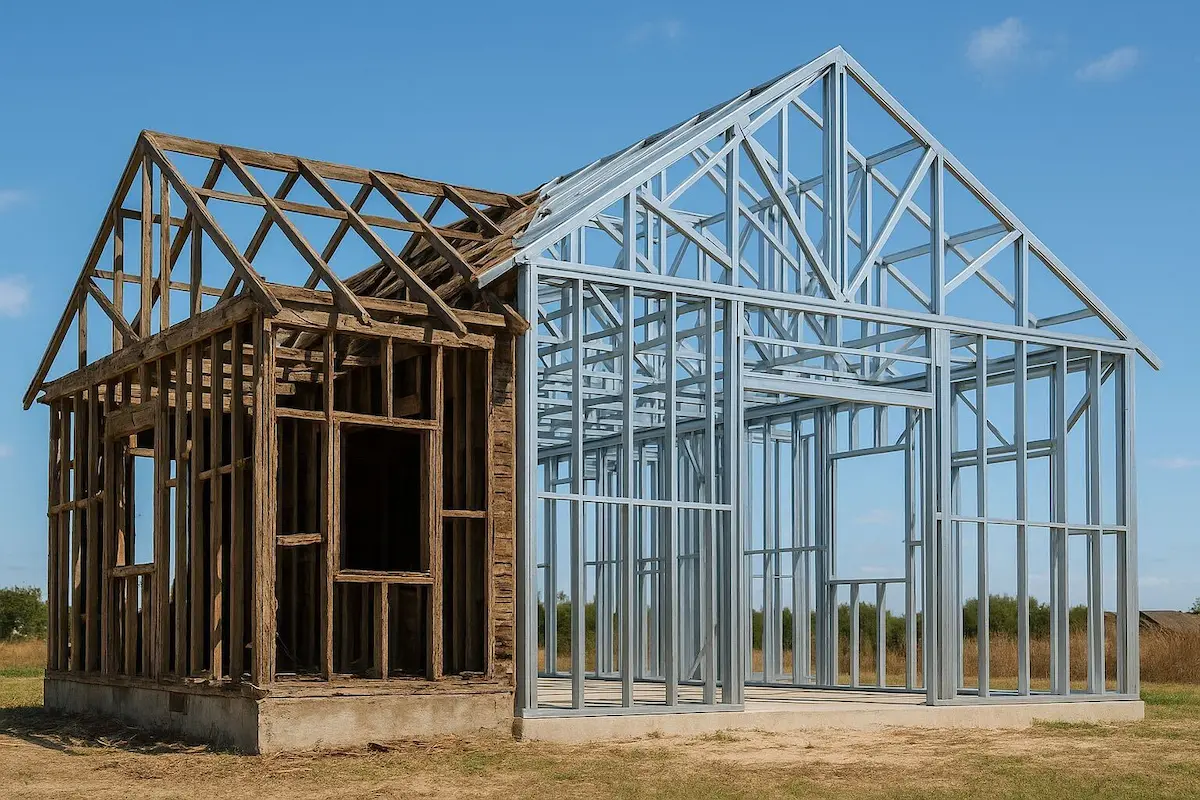
One of our Canadian borrowers, Build Smartr is trying to change that math. The British Columbia-based company founded by Harv Sidhu manufactures prefabricated steel-frame wall panels, joists and trusses for homes and low-rise buildings, in place of conventional lumber framing. Their steel frames are dimensionally stable, made from up to 99% recycled material, and don’t burn.
Build Smartr’s business is built around a version of this question: if we know homes are going to face more fire, more flood, more extreme weather, why do we keep building them the same way?
"We need to build more resilient buildings that withstand forest fires…" Sidhu said in a 2025 conversation with the Goparity Canada team. "…buildings and homes that will last longer or take less damage. We're really seeing steel be a major player in that space, being that it creates non-combustible homes. We need to make homes stronger to make them last longer."
Build Smartr's break came when BC Housing needed a contractor for an eight-storey building in Langley, near Vancouver after an earlier version of the project, framed in wood and roughly six storeys up, burned down mid-construction. The city responded by requiring the rebuild to be non-combustible, and Build Smartr's steel framing fit the requirement. As Sidhu told Canadian Manufacturing, steel's advantage is that it's stronger, it lasts longer, and it isn't combustible, an argument that gets harder to dismiss with every fire season.
Where Goparity fits in
We've now financed three separate campaigns with Build Smartr through our platform, totalling CAD $220,000 (around 137K euros), the most recent closing this past January. That money came from hundreds of everyday investors who pooled their investments to back a company working to build homes that are more resilient when wildfires strike.
We're not going to pretend that's a solution to what's happening in northwestern Ontario right now, or to what Jasper is still living through two years later. It isn't. Materials don't stop a fire on their own, and no framing system fixes the underlying problem of a hotter, drier climate producing more dangerous fire seasons. Builders who followed every provincial guideline of FireSmart, Canada’s wildfire-preparedness programme, have still lost homes this year.
What it is, is one example of the kind of choice that gets made long before a fire ever starts, in a lumber yard or a steel shop, months or years before anyone is evacuating. We think that choice is worth funding, and worth talking about, even in a week when it's hard to talk about anything else.
If you're one of the thousands of people currently displaced in northwestern Ontario, or watching someone you love go through it, our thoughts are with you.
If you're looking for a way to help directly, the Anishinabek Nation 7th Generation Charity is collecting donations specifically for Namaygoosisagagun First Nation, covering emergency supplies, temporary shelter, and essential resources for the community named above. The Canadian Red Cross's Canadian Wildfire Fund is supporting the broader response across northwestern Ontario, including evacuee services in Thunder Bay.
Written by



.webp)

.svg)

.svg)


.svg)

.svg)
.svg)
.svg)
.svg)
